World Cup 2026: Brands vie for attention at football's biggest tournament
FIFA has tried to hide brands at the World Cup, but this has made those brands more talked about, which exposes the problems of ambush marketing.
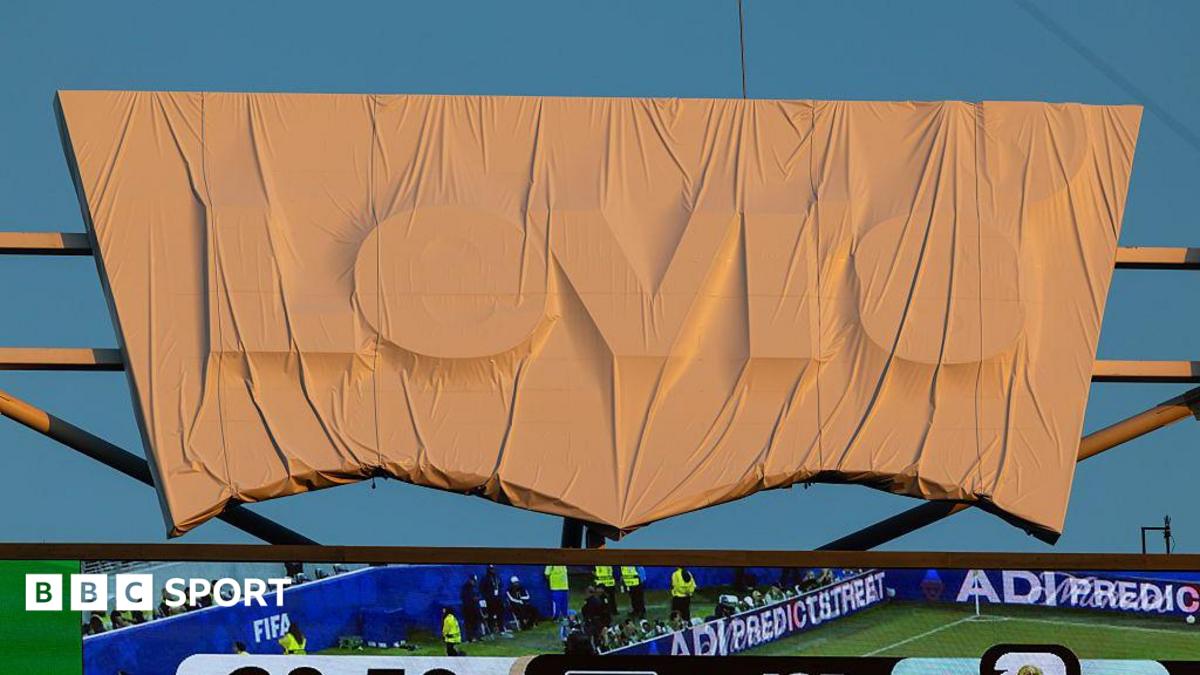
It was expected that Levi's would not be the biggest brand at this World Cup. So are Hines and Beets. In fact, FIFA is trying to make sure they are less visible. This is what everyone is talking about. Outside Levi's Stadium in San Francisco, the iconic Levi's logo is covered in white plaster. In the press box, ketchup bottles with Heinz logos are sealed. Also Germany's Jamal Musiala was photographed covering the Beets logo after the match. Not all of these are FIFA's official sponsors, but they're at the center of one of the biggest stories of the World Cup - generating more conversation than the brands that paid millions to be official.
It's called the Streisand Effect — named after singer and actress Barbra Streisand, who tried to remove photos of her home from the Internet, only to see more and more of them. When we try to hide something, it shows that it will be seen more and FIFA realizes this in the current era. Football's world governing body didn't do this out of spite. It is safe. Official sponsors pay enough to be associated with the World Cup. Some partnerships are valued at over ten million pounds. As part of that, they have the right to protect official sponsors from other brands.
FIFA once built a more economic order. It will rename stadiums, restrict what players or fans can wear inside, protect the language and protect the script of the match. But fans' attention spans vary, and brands are looking for a side door to the conversation. This is called ambush marketing - FIFA has been against it since 1994.
In 2006, Netherlands fans were asked to remove their graffiti when entering a World Cup stadium. It's not for nothing - because they have the sari on the sari - the sari's logo is called the official World Cup sponsor if the sari is not on the sari.
In 2010, South African airline Kulula was told to stop promoting itself as the official carrier under the name 'I Know You'. The removal was too much for the campaign.
In 2014, Sony was an official FIFA sponsor and banned Beats from every World Cup stadium and media event. Sony sent each player a free pair of hearing aids, but the top players wore the Beats on the cruise, in training, on the road, everywhere... where FIFA regulations couldn't make it.
Beats released a five-minute ad, and Sony pushed the exclusivity, but all of Beats got attention while listening.
FIFA's practice – not of the sponsors it wants to protect, but of the brands it wants to expel – has become the story. What's most interesting about these stories isn't control, it's what happens next. Hines becomes a brand new product with a sealed bottle. Beats posted a photo of Musiala with the logo covered, with the caption: "Warning: This is a B." It was a foreshadowing of a new listening model that no one knew about.
FIFA actually launched a product for Beats. Levies took no action. It simply allowed FIFA to cover its logo and leave everyone behind. A unique social registry created thousands of connections. A Tiktok of the closed symbol received nine million views. Levi's has released the iconic logo in London, Paris, Milan, Berlin, Hong Kong, Brazil and Mexico. In this, the closure has become an advertisement.
FIFA's practice is not just about creating publicity. It helps brands grow and build.
It would be easy to say that ambush marketing is more than sponsorship. But this misses an important distinction. Levi's, Peets and Hines have received attention. Official sponsors play a different game. They have rights, approach, activities, hospitality opportunities and official affiliation with the world's biggest sporting event. Those benefits cannot be recreated. So, sponsorship and ambush marketing aren't really competing for the same thing. One is receiving the event and the other is trying to join the conversation. Ambush marketing can win the competition; Sponsorship can then be remembered. It's clear who has the world's attention right now. It's a question of when it's kept, after the file is picked up and after it comes out of shutdown.
▶Videos
Players